The First Ten Minutes: Reading a UK Salon Before It Touches Your Skin
Photo: Karntheking, Public domain, via Wikimedia Commons
There is a particular quality of attention in a good salon before anything begins. The therapist sits down, rather than standing over you with a clipboard. The questions are specific. Nobody reaches for your face before asking whether they may.
It is a small thing, and it is increasingly the thing that separates a genuinely polished experience from an expensive one. In a market where a course of facials can cost as much as a decent winter coat, and where advanced treatments are marketed on results rather than recovery, the consultation has quietly become the most reliable indicator of how a salon operates.
The consent form is not a consultation
A form is a legal document. A consultation is a conversation, and the two are routinely conflated. Signing a waiver tells the salon that you accept the risks it has chosen to disclose; it tells you almost nothing about whether the therapist has understood your skin, your medication or your history. When a receptionist slides a form across the desk and the next thing you feel is a cleanser, the first ten minutes of your treatment have already been spent on administration rather than assessment.
This is not a trivial distinction. Most adverse outcomes in non-surgical treatments — a reaction to para-phenylenediamine in a tint, a burn on recently waxed skin, a peel performed on someone using a prescription retinoid — are foreseeable. They are prevented in conversation, not in a signature.
What a proper ten minutes contains
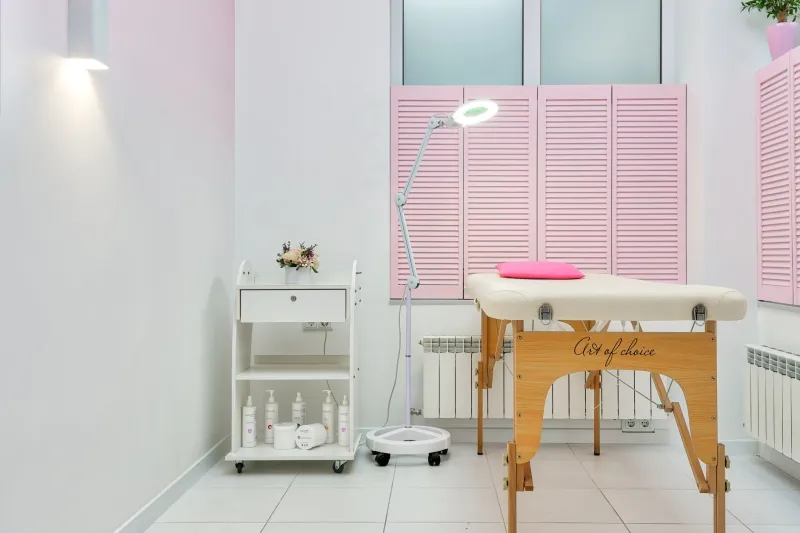
A competent consultation tends to follow a recognisable shape. There is a medical history: medications, allergies, pregnancy or breastfeeding, any diagnosis such as rosacea, eczema or melasma. There are questions about recent sun exposure and sunbed use, about the products currently in use and how recently they were applied. There is a look at the skin under adequate light, sometimes with a magnifying lamp or a Wood's lamp, and an honest statement of what that examination can and cannot reveal.
Then comes the part that separates the good from the merely competent: an explanation of what the treatment will do, what it will not do, how many sessions are likely to be needed, what downtime to expect and what the realistic cost of the full course will be. Where relevant, a patch test is arranged 24 to 48 hours in advance — standard practice for tinting and lash adhesive, and advisable for waxing on skin treated with retinoids.
The commercial case for slowing down
Salons that rush the consultation often believe they are protecting their diary. In practice they are protecting nothing. Reactions, refunds, negative reviews and lost rebookings cost far more than fifteen minutes of a therapist's time. There is a regulatory dimension too: the Consumer Protection from Unfair Trading Regulations 2008 address misleading omissions, and the Advertising Standards Authority expects before-and-after imagery and efficacy claims to be substantiated. A salon that cannot explain a treatment in person is unlikely to have the evidence behind the claims on its website.
Signals worth noticing
A salon that takes the opening minutes seriously tends to display a handful of habits. The therapist asks before touching your face. Medication comes up unprompted. You are asked what you have had done elsewhere and when. Aftercare is explained before payment, in writing, with a contact route for questions. Somebody mentions a follow-up.
Most tellingly, a good practitioner will occasionally decline. Refusing to wax someone who has used isotretinoin within the recommended window, or to perform a resurfacing treatment on tanned skin in July, is not obstruction. It is the clearest evidence available that the advice you are being given is clinical rather than commercial.
The warning signs
Less reassuring is a therapist glancing at the clock, or a double-booked diary in which your consultation happens while someone else is being tinted. Vague answers about downtime are another signal, as is the phrase "painless, no downtime" applied to treatments that reliably produce both. Being pressed to buy a course on the day, before you have had time to consider it, is a sales technique rather than a clinical recommendation. For injectables and other aesthetics, checking whether a practitioner appears on a recognised register such as Save Face is a sensible additional step.
Aftercare is the second half of the service
If the first ten minutes establish what will happen, the last five establish what happens next. Written aftercare, a direct number, and a realistic description of the next 48 hours — redness, sensitivity, what to avoid, when to seek advice — are part of the treatment, not a courtesy. A salon that hands over a printed sheet and asks you to call if anything concerns you has understood the brief.
How to get more from yours
Book the consultation as a separate appointment where the option exists, even if it costs a small fee that is redeemable against treatment. Arrive with a list of what you are using, including prescription products, and be candid about sunbed use and past reactions. Ask who will perform the treatment, what device or product will be used, and what the plan is if your skin responds unexpectedly. A salon that welcomes those questions is usually the one worth returning to.
The ten minutes before a treatment are not an administrative preamble. They are the treatment's foundation, and increasingly the clearest signal of whether a salon deserves the rest of your appointment — and your money.